
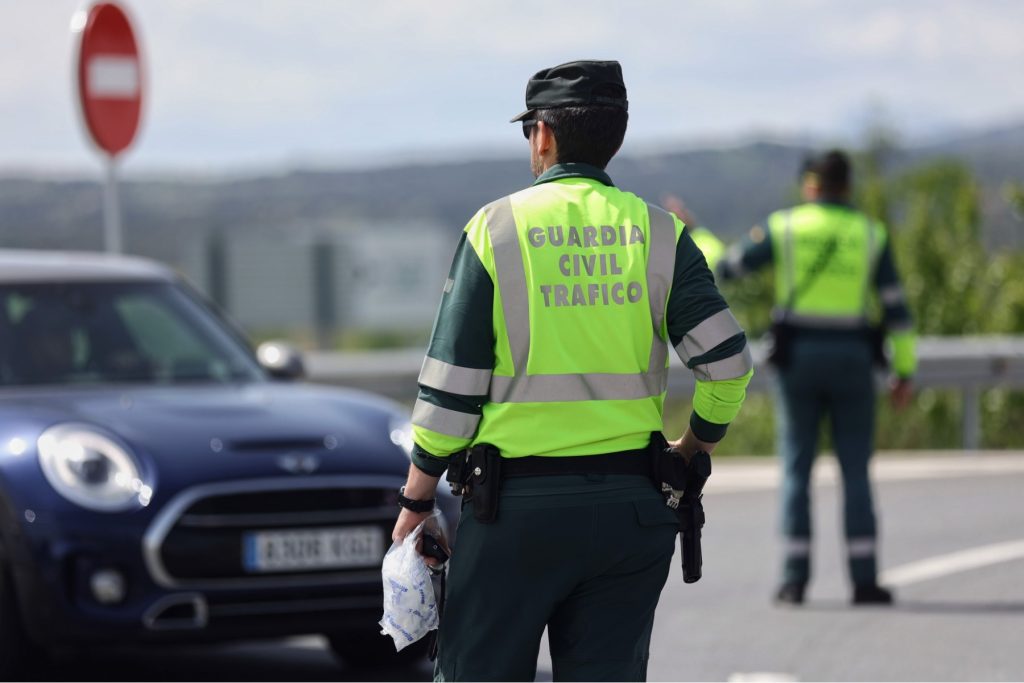
In some cases, refusing a breathalyser or drug test in Spain can be treated more strictly than a positive result. We explain why — and what to do.
Many tourists and expats living in Spain assume that refusing a breathalyser or drug test will help them avoid trouble. In reality, the opposite can be true.
In Spain, refusing a test can be treated as a very serious offence — and in some cases even as a criminal offence. On the Costa del Sol, police checks are frequent during the season, especially around nightlife, beach clubs, festivals and tourist hot spots.
How do police checks work in Spain?
Guardia Civil and Policía Nacional carry out regular road checks across the country. They are particularly common:
- ◆during weekends
- ◆at night
- ◆throughout the summer season
- ◆in tourist areas
A check can include a breathalyser, a drug test, a document inspection or a vehicle roadworthiness check.
What many foreigners do not realise
Many people wrongly believe that refusing a test means nothing can be proven and therefore no penalty will follow. In Spain, however, refusing a breathalyser or drug test can be treated very harshly.
Refusal can be more serious than a positive result
In some cases, refusing the test is judged more severely than a positive result itself.
What are the consequences?
Consequences vary by case, but may include:
- ◆high fines
- ◆loss of the driving licence
- ◆seizure of the vehicle
- ◆criminal proceedings
- ◆further legal complications
An additional issue is that certain substances can remain detectable in tests long after use.
Why is this a particular problem for expats and non-EU clients?
Legal problems can have a significant impact on residency, visas, the Digital Nomad Visa, immigration processes or long-term residency applications. This matters especially for non-EU clients managing residency legalisation, work permits or relocation to Spain.
Costa del Sol — very active checks during the season
In cities such as Marbella, Puerto Banús, Málaga or Fuengirola, police checks are very common during the summer. Tourists, rental cars, luxury vehicles and regular residents are all checked.
How Dellara Group can help
Legal or administrative complications in Spain can be extremely stressful for foreigners — particularly if you don't speak Spanish well, don't know the local system, or don't know how to communicate properly with the authorities.
At Dellara Group we help our clients handle sensitive and complex situations discreetly, professionally and with a focus on rapid coordination. We assist with communication with institutions, administrative coordination, translation and on-the-ground assistance, referrals to trusted legal partners, support with relocation-related complications and the resolution of urgent situations on the Costa del Sol.